
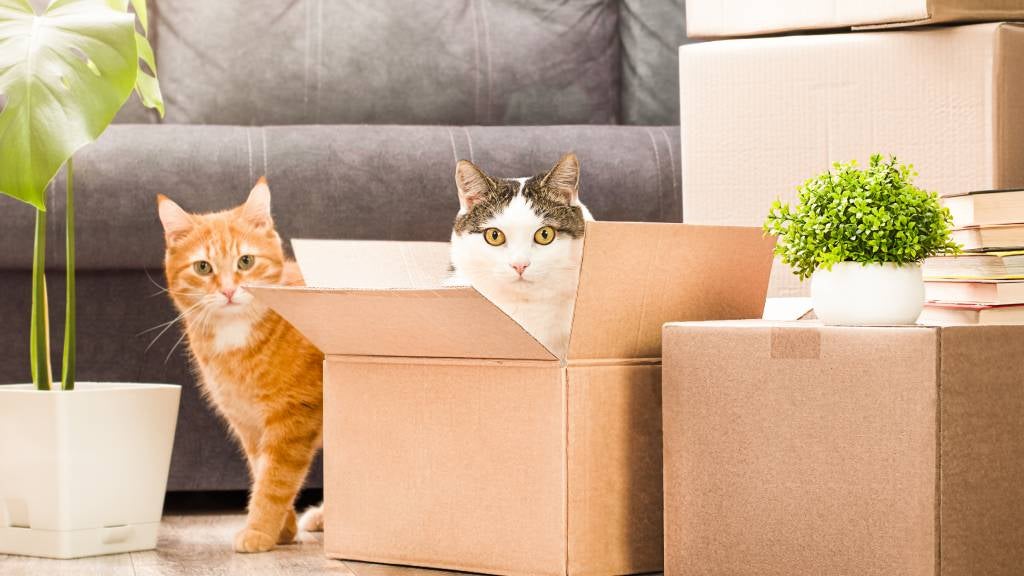
Moving house can be pretty stressful, and doing so with pets often adds another level of difficulty! But don’t worry – we’ve got you and your four-legged family members covered.
Here is our paw-some guide on how to move house with pets and keep everyone safe and happy in the process. We’ve got tips on proactive prep work, moving day safety and logistics, and how to settle your dog or cat into their new digs.
So, if you’ve got a move on the horizon, unbox this guide, pack away your worries, and let’s get started.
Before the move: Your 8-week preparation checklist
With some timely preparation in the 8-weeks before moving day, you can prevent a lot of common problems and stresses! Here’s a step-by-step guide of what to do.
8 weeks out: Pet prep
Now is the best time to schedule a veterinary visit to:
- Check that your pet is up to date with their vaccinations (including any that they may require for your new area), in case they need to go into a boarding facility for moving day.
- If you don’t know it already, have your veterinary team confirm your pet’s microchip number and then consult them about changing the associated microchip registry database details to your new address prior to your move. The database varies across each state and territory, so keep this in mind!
- If your pet is the anxious type or tends to get travel sick, consult your vet regarding safe supportive medication or supplement options for moving day.
6 weeks out: Calm travel
- Given some pets only travel to the vet or boarding facilities, it’s understandable that they may find the car a little scary! If your pet is in this camp, it’s a great idea to start acclimating them to calm travel.
- This will involve helping them develop positive associations with the car and their travel crate/carrier.
4 weeks out: Research and planning
- If your pet is on any special medications or a prescription diet, ensure that you have enough to see them through until at least a couple of weeks after the move – things may be hectic enough without having to worry about your pet suddenly running out of their meds!
- Unsure about the GP or emergency veterinary clinics in your new location? Do some research online or ask your current vet for recommendations.
- If you’ll be changing veterinary clinics after your move, phone your current clinic and request them to send your pet’s medical records on to the new location.
- Make plans for how to keep your pet safe on moving day – will they stay with you, go into boarding, or have a visit with a trusted friend or pet-sitter?
- Ensure your pet is wearing a collar and tag with your mobile number on it.
The week prior: Packing
- If you haven’t already, start slowly introducing boxes into the house and packing – not only can this help keep you on schedule, but it will also give your pet time to adjust to the process.
- Pack a bag containing your pet’s essentials, such as food, toys, medications, a collapsible water bowl, leash/carrier, bedding, and documents (e.g. vaccination records), and ensure this is kept accessible for moving day.
- If you’ll be moving overseas with your pet, it’s safest to consult with your veterinarian or a reputable pet travel service up to six months prior to travel (depending on your destination and the time you’ll spend there), as pet quarantine requirements may take months to complete.
A vet’s perspective: The microchip that brought a cat home
Moe the domestic shorthair cat and his family were packing for their sea change. Well, the family were packing, and Moe (thoroughly unimpressed by the whole business) was hiding under a bed!
During the hustle and bustle of packing, one of the doors to the house was accidentally left open. When Moe’s family realised, they closed the door and immediately searched the house for him. Unfortunately, Moe was nowhere to be found. His family were very worried, as Moe was an indoors-only cat, so didn’t know the area and would probably be very frightened.
After hours of unsuccessful searching around the neighbourhood, Moe’s upset family left their information with the neighbours, local vet clinics and their local council. With heavy hearts, they proceeded with their move, hoping that someone would contact them soon with news of Moe.
Two days later, the family received wonderful news – a very scared Moe had been found crouched in a garden several suburbs away from the old house and had been taken to a veterinary clinic where his microchip was scanned. Because the associated contact details were up to date, the veterinary clinic was then able to get in touch with Moe’s family. Later that day, Moe was reunited with his relieved pet-parents, and travelled to his new seaside home for some R&R!
During the move: Your moving day survival guide
The upheaval of moving can be quite unsettling for pets, particularly those who are more vulnerable to change and particularly dependent on a consistent environment and routine. Confining your pet to a quiet area is usually the best way to keep them safe and feeling calm, as well as keeping them out from underfoot!
If your furry friend feels comfortable boarding or staying with a trusted pet-sitter or friend for a couple of days, this can be a great way of protecting them from the stress of moving day.
Otherwise, if you think your pet would be best with you, it’s recommended to tire them out in the early morning (with a long walk for dogs and an active game for cats), and then set them up in a comfortable, escape-proof area. In the earlier parts of the move, it’s usually a good idea to shut your pet in a quiet room (with clear signage on the door so removalists are aware to ask you before opening the door), with comfortable bedding and water, and a few toys and treats.
Cats should be left with a clean litter tray, whereas dogs should wear a secure harness/collar and lead, so they can be taken out for regular toileting opportunities. In the final hour or so, your pet may need to stay with you instead, either on lead or in a secure, well-ventilated crate with some soft bedding.
If your pet is prone to anxiety, it can really help to consult your veterinarian regarding the pre-emptive use of calming pheromone sprays, supplements or anti-anxiety medications.
After the move: Settling into the new home
Phew, you’ve arrived in your new home! Though you’ll probably be feeling relieved (and maybe exhausted), your pet may feel a bit lost or nervous in this new and unfamiliar environment.
In the first few days, try to take some time to help relax your pet into their new home by:
- Setting up a comfortable room with their old bedding, toys and bowls (and a couple of litter trays for cats), so they can enjoy some familiar scents and have somewhere safe to rest whilst you unpack. You can then gradually give them access to more of the house when they seem ready.
- Taking dogs for on-leash walks with lots of sniffing opportunities, so they can start to get to know the new neighbourhood. Try doing this when it’s quiet outside without the distraction of other pets.
- Trying to keep to your pet’s familiar routines (e.g. usual feeding and exercise/play times) where possible.
- Offering your pet regular toileting opportunities until you’re sure they can easily find their new toileting location on their own.
If you’ll be letting your pet out into a new yard, first check that it's secure, with no obvious hazards (such as any toxic plants that they could nibble). It’s safest to keep cats confined indoors until they’ve settled into a new home.
Frequently asked questions ( FAQsFrequently Asked Questions )
Moving with pets often comes with plenty of questions. To help make the transition smoother for both you and your furry friend, we’ve answered some of the most common concerns cat owners have when settling into a new home.
How long should I keep my cat inside after moving?
Even if your cat is used to going outdoors, it’s best to keep them inside for a week or two until they’ve settled in. Once you think your cat is feeling comfortable indoors, you can then gradually start to let them out into a safe yard under supervision. If your cat is the nervous type, you could consider a “soft launch” by taking them out the first few times in a secure pet pram or on an appropriate harness and lead.
Should I use calming treats or medication for my pet during a move?
Calming pheromone diffusers/sprays such as Feliway and Adaptil can help your pet to feel more comfortable in their new environment. However, if you feel they’re likely to be significantly stressed by the move, it’s best to pre-emptively consult your vet. Depending on your pet’s level of anxiety and their general health, your vet will be able to make personalised recommendations on calming supplements and/or anti-anxiety medications.
My pet seems really stressed after our move. What should I do?
Try to stick to your pet’s usual daily routines and be extra patient and kind with them – after all, suddenly finding yourself living somewhere completely different could take some getting used to! However, if your pet isn’t settling in after a week or seems particularly anxious (e.g. showing signs of inappetence or separation anxiety), it’s best to consult your veterinarian for further advice.
Moving soon?
Relocating with pets doesn’t have to be ruff. With a little planning, a lot of love, and the right support, you can help your furry friend feel safe and settled every step of the way. Speaking of support, consider whether Buddy Pet Insurance may be the right choice for you.
3 Nov 2025